Thursday, October 21, 2010

Awasa

On Wednesday morning we went with Ben and Kelly Taylor down to Awasa, a town of about 200.000 people down in the south. I was looking forward to get out of the city and into the countryside to see more of the landscape that I considered to be traditionally African. We rode in Ben and Kelly’s truck down a pretty straight shot road for over five hours. There were a few pit stops, mainly to Bishaftu, a lakeside resort where David and Kelly’s families would go for retreats and vacations. It was a very soothing place to sit and eat our lunch. David jumped into the lake and swam around for old time’s sake.


The countryside is almost sparse, but not quite. It’s covered in teff fields and the lone, sprawling acacia trees. Mud huts dot the roadside and dusty mountains frame the horizon. It looks a lot like I’d expect Africa to look.
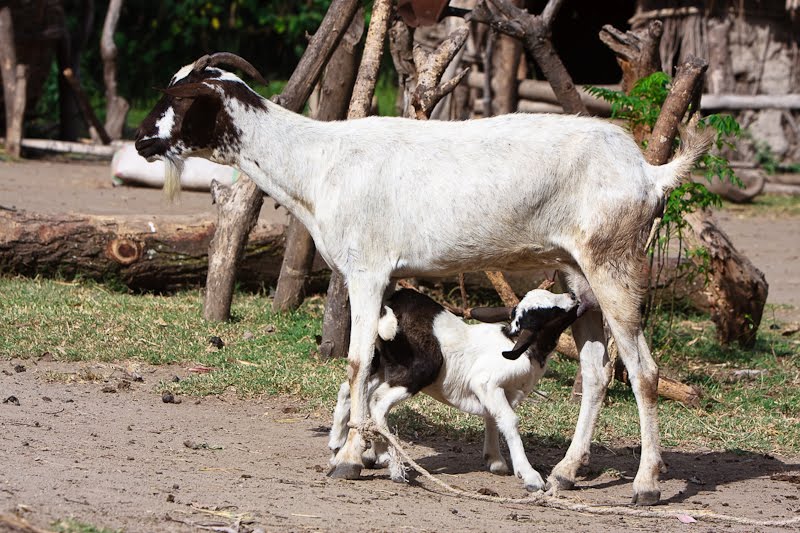


Driving here is a different and often terrifying experience. There are no traffic rules except that drivers generally stay on the right side of the road. I say generally because when there’s no oncoming traffic, cars tend to use both sides at their leisure. Cars aren’t the only thing in the road either. Herds of cows, goats, donkeys and horses all meander across the asphalt. Often their direction is unpredictable, you have to pass them carefully lest you hit one and have to pay the animal’s owner in compensation. Even with all of these obstacles, the worst is people. They line the side of the road as if they’re holding some soiree or cocktail party. When you honk at them to get out of the way and drive past, they glare at you as if you’re intruding. The thing that makes these careless pedestrians so scary is the Ethiopian law. If you hit a person and kill them, then you automatically get thrown into jail for fifteen years! This threat is a very real one. In fact, there was a missionary at the guesthouse who’d faced this very dilemma. A few days ago she hit and killed a man on her way back to Addis Ababa. She was thrown in jail for a few nights and then taken to court. The judge found her guilty, yet miraculously let her return to her home country because of all the good work she’d been doing down country. Apparently such exceptions are quite rare. Needless to say, this prospect makes driving less than comfortable.
Our first day in Awasa was basically a tour of the city. It’s smaller and less polluted than Addis. Ben and Kelly live in a lovely little compound with their German Shepherd “Macintosh.” Their neighborhood backs up to a lake bordered with large, flowering trees. This emerald foliage is home to giant hornbill birds and monkeys. Ben and Kelly took us to the open-air market, since Thursdays are market days. It was dusty and hot. The sun was blazing down. We quickly collected a spectatorship of street children. They trailed us from stall to stall, doing nothing but staring at us. I almost preferred it to the alternative. Lots of people will shout out as we pass, “You! You! You!” or “Ferengie!” After a while the accosting gets rather exhausting. At times it can feel almost hostile. I much prefer the Korean way of handling things, where staring at people is rude and raising your voice a decibel over conversational level in public is considered very rude.


It’s odd to see the wildlife here. Animals you’d expect to be caged up in a zoo roam quite freely. Monkeys, birds every color of the rainbow and hippos have all been on our sighting list. All of these within the limits of the city. Kelly and Ben took us to a local monkey hang out. We brought stale cookies and fed them by hand. They walked up in a very dignified fashion and take the cookie straight from your grasp. The oreos were their favorite. They would take special care to lick the cream.


Contrary to popular belief, we haven’t just been sightseeing here. The Taylor work for a foundation called “Water is Life,” which organizes the installment of freshwater pumps in poor, rural communities which don’t have access to clean water. David and I have been traveling out to the well sights, gathering photography and writing material to help out with the organization’s media needs. David is taking pictures for their brochures and newsletters while I’m writing up snapshots on how the well has impacted peoples’ lives. It’s been pretty cool. I’ve never done something quite like it before.
Visiting the wells was a bit overwhelming for me at first. One of our first stops was at a Compassion school, where over 300 kids use the well during school hours. We got there just as the kids were getting out of classes for the day. It was a mob. Literally. Children pushing and shoving each other to get close to us. My braid kept getting tugged by kids who wanted to feel my hair. My arms were pinched to the point of pain by curious fingers. I don’t do too well under attention… and the rapt, intense attention of almost 300 kids was nearly stifling. It’s not like I could avoid it either. Any way I walked, the crowd of children migrated along with me. At some points it got so bad that some of the school officials had to drive them back with sticks. In some ways I imagine it’s what celebrities must feel like when mobbed with fans and paparazzi.
The kids were really sweet though, and it was pretty cool to be able to see a Compassion project in action, since we sponsor children through that organization. There was one point in the visit that was a little heartbreaking. One of the little boys was crying, and our translator Yar asked him why. Apparently he’d lost his pen, which meant that his family would probably beat him when he got home. I was about to give him mine (I’d finished with my notes) but Yar slipped him a few birr before I could. I ended up giving my pen to one of the other kids. It’s funny how an item that is essentially worthless to us is so incredibly valuable to them.


Happy Birthday David!

We visited a lot more well sights in Longano… I’ll post my finished writing product on those in a few days once David gets all the pictures and stuff ready for it.

Thursday, October 14, 2010

Addis Ababa

We stayed the night in Oamaru and headed up to Christchurch the next morning to say farewell to New Zealand. Our flight was at 4:00, and we managed to get there early, which turned out to be a very good thing. Because we’re in the process of moving back from South Korea, we have a rather awful amount of luggage with us. Our flight to Ethiopia was with Emirates Air, one of the top-rated airlines in the world. For some reason, they’re super-strict with luggage requirements, only allowing about 30 kgs per person. For every 1 kg over the limit you are, they charge you $90! Also, your carryon luggage had to weigh less than 7 kgs… or it had to be checked. Overall we were about 27 kgs over the limit… if we wanted to take everything it would have cost us over $2000!!
We sucked in our breaths, dragged our suitcases over to a non-crowded corner and began gutting. It’s amazing what suddenly becomes disposable when you have to pay $90 for every extra kilogram. After about forty-five minutes of wistful tossing, we finally whittled our luggage down to an acceptable weight. Definitely one of the worst experiences I’ve had with check-in before.
The flight was 29 hours long (including the layovers and such). On Emirates, it wasn’t bad at all. They had personal TV screens with on demand movies. Gourmet meals every few hours. I managed to get about 7 hours of sleep and watch about 5 movies. Another highlight was that, flying out from out layover in Dubai, I got to see the tallest building in the world from the window of the aircraft. It’s pretty dang tall.
So we’ve finally made it here to Addis Ababa, Ethiopia, David’s homeland. We arrived rather weary and jet-lagged at 12:00 in the afternoon. One of David’s childhood friends, Biruk, met us at the airport. It was so wonderful to have a friend who speaks the language fluently. He haggled with cab drivers for us and helped us get to our guesthouse without any hitches. David and Biruk spent the afternoon catching up over the six years that David has been away while I fought off the urgent urge to take a nap. Over the past year I’ve learned well that the best cure to jet lag is to just make your body submit to the local schedule, ie, wait until nighttime to sleep.
First impressions of Addis Ababa. This city actually reminds me a good deal of La Paz, Bolivia. Something about the atmosphere of the streets: the dust and exhaust, the way tiny wooden shops proudly display cultural handicrafts, the broken sidewalks, the old, beaten cabs. While we’re in the thick of the capital city, it’s sometimes hard to believe that this isn’t some sort of outlying suburbs. It’s not thick or terribly crowded like Seoul. The buildings are all almost uniformally one storey tall, occasionally two or three. There seems to be a very deep cultural heritage here, different than the sort of Korea or Cambodia or Bolivia. I think much of this is due to the fact that Ethiopia has never been enslaved or overrun by a culture different than theirs. I’m told they’re one of the only nations in Africa that has never been officially colonized.


The guesthouse we stayed at in Addis!

First time in Africa!

I got a very good taste of that heritage when Biruk and another Ethiopian friend named Addis took us to a cultural restaurant for dinner. I’ve had Ethiopian food before with the Strausses in Charlotte, but this food was on another level of goodness! injerabowat is their traditional food. It’s a dish that consists of a very flat, spongy pancake-like bread (injera) and a bunch of different sauces with meat, vegetables and butter all brewed into tons of spices (bowat) on top of it. You use your hands to tear off pieces of the bread and dip it into the meat. Overall it’s quiet a filling and satisfying meal.
The restaurant we went to had performers playing traditional music and dancers performing traditional dances. Biruk and Addis thought it would be a clever idea to have David and I get up and dance on the stage in front of the entire packed restaurant. They wrote a clever note to the band members, who then coaxed us up on stage and got us to dance. It was challenging, and I’m sure I made a fool of myself, but at least I had the guts to go through with it!


Our first full day in Addis was spent catching up with people David knew as a kid and going to sights that were familiar to him. We went to the very dusty Merkato, where everyone yelled “Ferengie!” (foreigner!) whenever we passed by.


We also went to the compound where David and his family lived when he was growing up. It was like an oasis apart from the city, with lush gardens and yards, clean, well-fed dogs with glossy fur, swingsets and stucco houses. It looked like a nice place to grow up. David says he doesn’t recognize a lot of it. Things change when you’ve been away for almost ten years!
When we were done visiting the press, we went to see Chaltu, David’s “second mother.” Chaltu helped the Strausses out with the household chores and such. She was a very sweet woman, and I could tell she loved David very much from the way she wouldn’t let go of him when she first saw him. She doesn’t speak too much English, and David doesn’t speak much Amheric, so communication was a bit limited. We sat around looking at old photos and eating while she held David’s hand and said his name over and over again (they pronounce it Dawit). I was still full from a huge lunch of injera, but she was quite insistent that I eat a lot. I had to keep eating, lest she think I didn’t like her food. By the time we left my stomach was bulging!

Unfortunately, later that night, the Enjera came back to haunt me. =( Which was no fun at all. The next day I felt weak and terribly dehydrated. So I hung around the guesthouse for the morning while David tramped around Addis and took pictures the whole morning. By lunchtime I was feeling better. Enough to be willing to go with David to tour some more of his childhood stomping grounds. These included ETC, the church and school were David’s father helped found (he taught classes there as well) and Bingham Academy, the school David attended when he was a child. Both of these places were a lot like the press compound in that they were lush and green and very well kempt. Very unlike the rest of Addis.
While I really enjoyed visiting these childhood places of David’s in Addis, I confided to him that I though it would be really hard for me to live in the city for a long amount of time. It’s just too barren, too full of dust and diesel fumes, too littered with trash. I know this sounds selfish of me. I’ve been married into a family that lived there for nearly twenty whole years. I greatly admire the dedication and commitment that shows to their calling there. God would definitely have to give me a special grace to stay long term in such a place. David and I had such different childhoods!

Farewell, NZ!!

Our last week in New Zealand was spent well. Once we stumbled back from the Milford Track we stayed at our host family’s farm for a few more days. They put us to work pulling weeds and tidying up the place (it was already pretty immaculate, but we just made it to look worthy of a magazine spread). We certainly left it looking pristine.


The end product of the weed pile!

The day before we were going to fly out of Christchurch, we bid our hosts farewell and meandered our way up to Dunedin, a city on the southeast side of the island. On our way we drove through the Caitlins and stopped at various sights such as a petrified forest from the Jurassic age.


The main attraction in Dunedin was Cadbury World. Ever since I went to England at 13 and had that first taste of a Cadbury milk chocolate bar, I have been captive to its wonderful creamy spell. When we first arrived in New Zealand, I was overwhelmed by how many Cadbury products graced the supermarket shelves. Crunchie bars, flakes, pinky bars, milk chocolate, dark chocolate, white chocolate, mint chocolate, coconut chocolate… you get the idea. The prospect of being able to visit the factory—to get a glimpse of where it’s all made, gave my heart a few flutters.
We got to the factory in time for the 3 o’clock tour. We had to wear hairnets while a guy in purple overalls led us through torturously scented halls lined with assembly-line machines. We got to see them making a 12 kg (7lb) chocolate bar for commercial use! They were also in the process for making crème eggs for Easter. The Cadbury crème eggs here are literally the size of a hefty grapefruit. I was literally drooling over the display of it, but unfortunately, didn’t get the opportunity to buy one (Why oh why couldn’t we have been there during the Easter season!?!?). At one point in the tour we got to watch a ton (literally 2000 lbs) of liquid chocolate drop down a height of 4 stories. It was ridiculous.
Even though we got free samples of products during our tour, David and I knocked ourselves out at the gift shop in the end. Since our time left in New Zealand was quite limited, we spent most of our cash on chocolate bars. Money well spent if you ask me!


Another exciting thing that happened that day took place in the supermarket just across the street from Cadbury World. David and I were shopping for dinner supplies when I noticed a rather tall girl perusing the fresh produce section. She turned around, and the realization slowly dawned on me that I recognized her. Not some long lost friend from home or anything—hers was a face I’d seen on TV. She was actually a contestant on the current season of New Zealand’s Next Top Model, an episode of which I happened to watch about a month earlier. I was a little shellshocked to see her in a supermarket…
From Dunedin we drove up north to Oamaru. This town has character with a capital C. Most of the settlements/cities in NZ are very similar when it comes to architecture. The buildings are all very small and boxy. Not so in Oamaru. There were old, stone based buildings that transported you back to the 19th century. It was lovely. But Oamaru isn’t famous for its buildings—it’s famous for its penguins.
We came to the town with the objective of sighting both the rare yellow-crested penguins and the blue-footed penguins (aka fairy penguins). I’d never before seen penguins in the wild, so it was to be a first for me. We headed off to Brush Beach, where the yellow-crested penguins are known to hang out. They’re very shy, and if they see or hear you they’ll dive straight into the ocean. We couldn’t reach the beach from where we’d parked the car—there were thirty-foot cliffs between us and the sand. I wandered over to the edge to get a closer look when all of the sudden one of those gigantic penguins scuttled away from me. I froze and stayed motionless while David scrambled back to the car to get the camera. The penguin and I locked eyes for about a minute. They’re such strange creatures, penguins. So awkward yet graceful at the same time. God really did have a sense of humor when he created those buggers.
We also got to see the blue-footed penguins as they swarmed in from their twilight feeding in the ocean. They were quite adorable—making sounds like eager squeaky toys as they waddled across the sand.


Farewell, NZ!